Sarah Vanover
  • Home
  • Books
  • Workshops
  • Blog
  • About Author
  • Contact

Blog

The Benefits of Sand and Water Play

1/1/2017

0 Comments

 
Picture
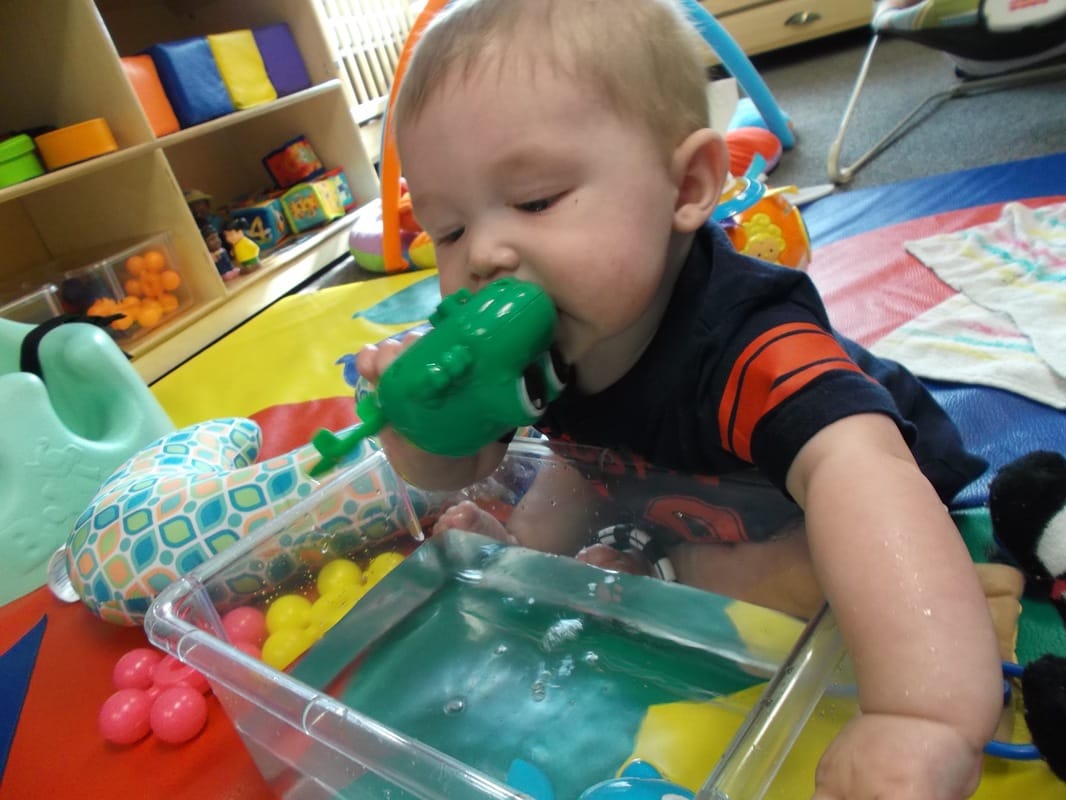
The sand table and water table can be two of the most popular areas of the classroom for the children, but it is important to remember that these areas are essential to the classroom for higher-level learning.  Even when teachers are frustrated because of the mess that these areas create (and when parents are frustrated that children come home with sand in their shoes), it is important to remember all of the benefits:
 
  • Sensory Exploration – Both of these centers allow children to learn with hands-on materials and take in new information through their senses.  These sensory experiences can assist some children with calming down their bodies.  Other children become engaged with the environment when they learn through touching, smelling, hearing, tasting, and seeing unique materials.
  • Mathematical Learning – The sand and water centers are introductions to higher level thinking concepts like volume.  When children empty two pails of sand into one larger pail, they begin to learn about which pail has more and which pail has less.  They have the opportunity to see how many cups it takes to fill the largest bucket.  They can also see how one tall pail of sand also equals a short, large bucket.  Children can use the sand to create shapes and structures.
  • Scientific Concepts – The water table introduces children to early physics concepts like motion and flowing water.  Children have the opportunity to make predictions about what objects will sink in the water and which items will float.  Sand and water areas introduce discussions about living and non-living items.  Children can learn about what animals live in sand and water habitats. 
  • Language Development – The sand and water areas of the classroom are wonderful environments to create conversations.  Young children typically play together in this area, develop intricate pretend play ideas, and ask one another questions.  These areas also give the teachers plenty of opportunities to talk to students about their creations and pretend play.  Teachers can get children to respond with the most creative responses by starting their conversations with statements like “I wonder what would happen if . . .” and “Tell me about . . . .”.
  • Social Skills – Since so many children want to play in these areas of the classroom, children must learn how to take turns and share the classroom materials.  Children must work together to create a castle in the sand, and young children play together to make their sea animals talk to each other in the water table.
  • Creativity – These centers are classic examples of open-ended materials that do not have one specific purpose.  Children focus on the process of playing with the sand and water instead of trying to create an end product.  These types of open-ended materials are the foundation of the early childhood classroom.
 
How do teachers encourage sand and water play in the classroom?
 
  • Sand or water must be available to the children in the classroom each day.  This allows children to have creative learning experiences, but it also helps to establish the classroom rules for playing in these centers.
  • Teachers need to model the behavior they expect in the sand and water areas.
  • Teachers need to provide a large amount of free play each day during the classroom children so that children can explore without feeling rushed.
  • Teachers need to encourage conversation in these centers by allowing children to talk or by modeling conversations with the children.
  • Teachers need to set-up the environment to provide the children with an optimum learning experience.  Teachers can include access to materials like measuring cups, basters, ladles, funnels, sifters, colanders, or small manipulatives like plastic animals.
  • Teachers need to monitor these areas closely (especially with very young children) to maintain safety at all times.
0 Comments


Leave a Reply.

    Author

    Dr. Sarah Vanover has been working in the field of early childhood education for over 22 years and has had the opportunity to be a teacher, a director, and a trainer for other early childhood educators.  She has a passion for making sure that children with special needs receive high-quality early care and education.

    Archives

    September 2017
    August 2017
    July 2017
    June 2017
    January 2017
    December 2016
    November 2016
    October 2016
    September 2016
    August 2016

    Categories

    All

    RSS Feed

  • Home
  • Books
  • Workshops
  • Blog
  • About Author
  • Contact