
Sarah Vanover
  • Home
  • Books
  • Workshops
  • Blog
  • About Author
  • Contact

Blog

What Does a Quality Preschool Classroom Look Like?

10/20/2016

2 Comments

 
Picture
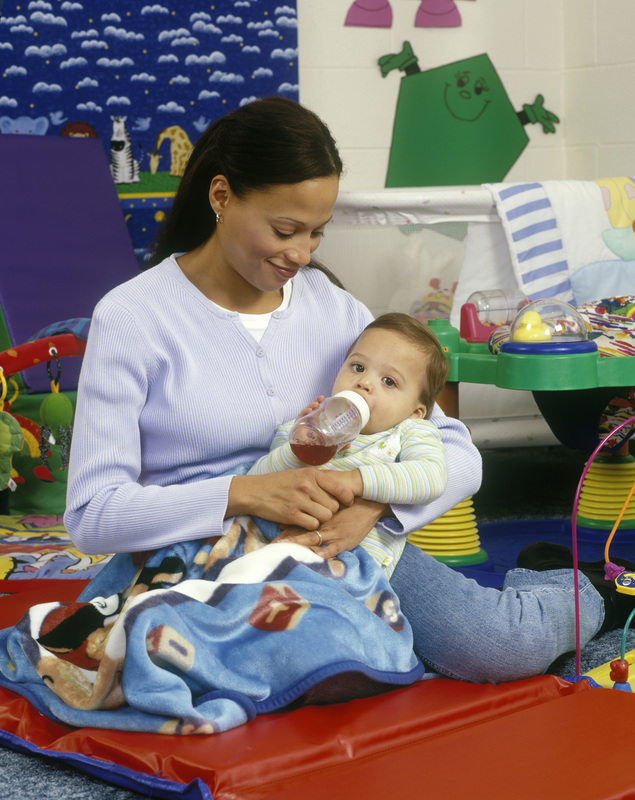
Developmentally-Appropriate Practice (DAP) is a style of teaching where the teachers create goals for the children based on the individual developmental level of each child and then find ways to support each child to meet those individual goals.  In the preschool classroom, a DAP classroom is led by the interests of the children, and the classroom allows young children to learn through play.  Since children enter preschool at many different levels of development (particularly in multi-age or inclusive classrooms), the classroom must be designed to support a variety of learners.  Here are some items found in the DAP preschool classroom:
 
  • Child-Sized Furniture and Materials – The classroom should be designed for young children and allow them to move freely and independently around the room.  This means that the furniture should be child-sized so that the children can sit independently at the tables, wash their hands, and select items from the shelves.  When classroom furniture is too tall, it may be unsafe if a teacher cannot see the entire classroom or if a child is encouraged to climb on the furniture to obtain an item that is out of reach.
 
  • Schedules and Routines – A DAP classroom has a daily schedule and routine in place.  This schedule should be displayed in the classroom with pictures and with words so that the children can see what occurs each day.  When young children know what activities to anticipate during the school day, they are often more comfortable to explore the environment and not be apprehensive of surprises.
 
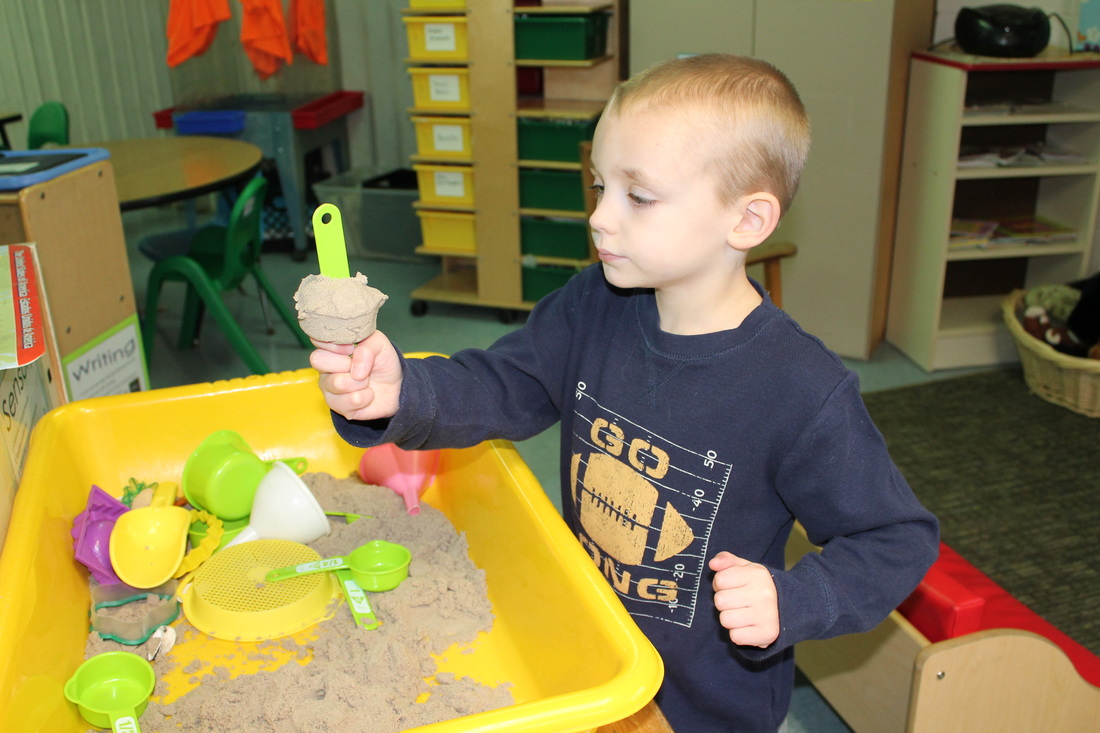
  • Centers and Engaging Materials – Children should have a variety of centers located throughout the classroom.  Classroom centers should include areas like art, dramatic play, music, blocks, literacy/book center, fine motor materials, science, math, social studies, and sensory materials.  Children should have indoor playtime and outdoor playtime each day.  Children should have the opportunity to play in quiet areas of the classroom, and they should be able to play with their friends in group activities.  New materials should be rotated into the classroom throughout the year to keep the children engaged in the classroom activities.
 
  • Freedom of Choice – It is important that preschool children have the opportunity to move throughout the classroom to select the materials that they are most interested in using.  It is typical for preschool teachers to ask the children to keep certain types of materials in one area of the classroom, like art materials or books in the book center.  Teachers should not expect preschool children to stay in one center for an extended period of time or to require young children to sit in a desk until completing an activity.  A young child should have the opportunity to explore the classroom materials and put them away when he or she is finished.
 
  • Language-Rich Environments – Early childhood classrooms should be full of language and conversations.  Teachers should be involved in conversations with young children instead of simply offering directions.  Children should feel comfortable having conversations with each other.  The classroom should display printed words on walls, shelving, and on classroom materials.  Shelves should be labeled with pictures and words so that children can independently return their materials to the shelves but also so the children can begin to associate those printed words with the classroom materials.  Children should have access to books, as well as paper and pencils, in every area of the classroom.  The more language that a child is exposed to at a young age, the more quickly that child will learn to understand and read those words at an older age.
 
  • Familiar Environments -  Children need to feel ownership of their classroom in order to feel truly comfortable.  Teachers often make the classroom feel more inviting by displaying pictures of each child’s family throughout the room and displaying the children’s artwork.  Each child should have his or her own cubby to store personal items.  Teachers also need to follow the interests of the children to select new themes and topics for learning.  If a child feels invested in the classroom, then he or she will be more comfortable to explore and then learn.
 
There are several things that you should not see in a developmentally-appropriate classroom:
 
  • Worksheets – Artwork and literacy activities in the DAP classroom should involve hands-on materials that children can touch and explore.  Instead of printing letters on a worksheet, preschool students should be creating letters out of playdough or writing letters in shaving cream.  Children learn best when the senses are involved.
 
  • Extended Sitting Still – Children in preschool classrooms should not be required to sit in desks or stay at circle time for more than ten to fifteen minutes at a time.  Young children still have very short attention spans.  Activities that last longer than ten minutes will not be as successful as short, hands-on activities that allow children to explore the information the teacher presents.
 
  • Excessive Screen Time – Young children should have limited access to screen time in the preschool classroom.  It is appropriate for a preschool classroom to have a computer; however, the teacher should monitor the time that each student uses the computer.  Students should only watch television in the classroom if it is a brief clip that is related to the content the students are learning and the teacher interacts with the children while showing the video.
 
 
You can learn more about Developmentally-Appropriate Practice at http://www.naeyc.org/DAP.
 
2 Comments
What is Wrong with Using the "D" Word?

10/14/2016

0 Comments

 
Picture
​Daycare is defined as the care and supervision of other people’s children.   This terminology is usually associated with taking care of the basic needs of young children (ex. feeding them, changing diapers, putting them to sleep).  The word daycare is often associated with poor quality care or with sympathy for young children that are separated from their family during the day.  Due to a large number of children in daycares with limited staff, a daycare center could be filled with the sounds of children crying.
 
In the past, anyone could work in a daycare.  There were previously no standardized qualifications to accept this position.  This often meant that individuals who were turned down for higher paying jobs accepted a job in a daycare.  Adults working in a daycare centers just needed to make sure that the children were still safe at the end of the day when their parents returned.
 
There has now been a shift in early childhood education.  Just like bankers, doctors, and lawyers, early childhood professionals must have more extensive training in a specific set of skills.  Childcare is no longer solely about safety and supervision.  That is only the foundation of quality early childhood education. 
 
A qualified early childhood professional must be able to demonstrate skills including:
 
  • Knowing the child development milestones for children from birth through the age of eight
  • Assessing a child’s development to see if he or she is demonstrating age appropriate skills.
  • Planning curriculum that includes gross and fine motor activities, social and emotional skills, art and creative activities, math activities, pre-literacy activities, problem-solving skills, language opportunities, and activities to increase independence.
  • Adapting curriculum for children with special needs.
  • Collaborating with other teachers, administrators, and special education experts.
  • Partnering with each family to increase student learning.
  • Developing individual relationships with each student and nurturing his or her development.
  • Creating a classroom where students feel safe and excited to learn.
 
This is a list of daily requirements that early education experts must master when they enter the field.  Based on these skills, the required education, and the professionalism of qualified early childhood professionals, they do not need to be associated with “daycare.”  These are teachers and early childhood experts that work in quality early childhood education programs.  They deserve the same respect as other skilled professionals that work in demanding and essential fields of practice.
0 Comments

The Secrets of Preschool Handwriting

10/11/2016

0 Comments

 
Picture
​Many parents are very interested in their children learning to write their names in preschool.  This is a skill that children will need in kindergarten; however, many preschool students may not be ready yet.  Preschoolers need to have muscle control in their hands and throughout their bodies in order to correctly hold a pencil and print letters.  Child development principles tell us that children develop from the center of the body out towards extremities.   This means that children must first develop control of their core muscles and their upper body before they will have control of their hand muscles.  When a child is struggling with handwriting, many occupational therapists will recommend activities like swimming and climbing before sitting a child down with paper and pencil.
 
If children are strongly encouraged to practice printing before they are developmentally ready, it can cause strain to the muscles in their hands.  Some children may even feel stress when the teacher invites them to participate in activities that they find to be too challenging.  Preschool should be a time when teachers can help cultivate a love of learning in their students, but this love of learning can not develop if children are afraid to participate in classroom activities.
 
A developmentally-appropriate preschool classroom focuses on allowing children to explore the classroom materials instead of asking children to sit at tables and complete teacher-directed activities.  To prepare children for handwriting activities in elementary school, preschool teachers need to allow children to participate in activities where they explore the alphabet letters and improve their fine motor skills. 
 
Appropriate fine motor activities include:  peg boards, play dough, modeling clay, lacing boards, puzzles, nuts and bolts, shape sorters, stringing beads on pipe cleaners, basic sewing activities, using tongs or tweezers, sorting, using small blocks or Legos, or ripping paper.  In fact, play dough and modeling clay are two of the best activities that children can use at home to develop hand strength and prepare for handwriting activities.
 
Children in preschool can begin creating letters by:  writing letters in shaping cream, making letters with wood pieces, exploring alphabet puzzles,  tracing on sandpaper letters, finding alphabet beads in play dough or in a sensory table, using magnetic letters on a cookie sheet, felt letters on a flannel board, drawing letters on a Magnadoodle, creating letters with play dough, labeling all materials throughout the classroom, and displaying environmental print familiar to young children.
 
These activities can help children learn what letters look like while developing their hand strength.  They also support a free-choice classroom that is led by the interests of the children and establish independence by allowing children to select their own materials and learn at their own pace.
0 Comments

    Author

    Dr. Sarah Vanover has been working in the field of early childhood education for over 22 years and has had the opportunity to be a teacher, a director, and a trainer for other early childhood educators.  She has a passion for making sure that children with special needs receive high-quality early care and education.

    Archives

    September 2017
    August 2017
    July 2017
    June 2017
    January 2017
    December 2016
    November 2016
    October 2016
    September 2016
    August 2016

    Categories

    All

    RSS Feed

  • Home
  • Books
  • Workshops
  • Blog
  • About Author
  • Contact