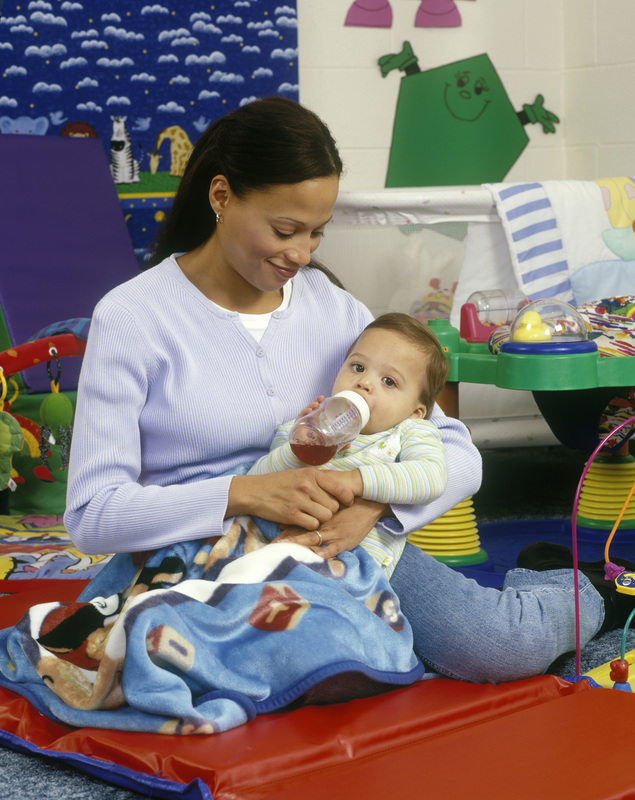
 Daycare is defined as the care and supervision of other people’s children. This terminology is usually associated with taking care of the basic needs of young children (ex. feeding them, changing diapers, putting them to sleep). The word daycare is often associated with poor quality care or with sympathy for young children that are separated from their family during the day. Due to a large number of children in daycares with limited staff, a daycare center could be filled with the sounds of children crying.
In the past, anyone could work in a daycare. There were previously no standardized qualifications to accept this position. This often meant that individuals who were turned down for higher paying jobs accepted a job in a daycare. Adults working in a daycare centers just needed to make sure that the children were still safe at the end of the day when their parents returned. There has now been a shift in early childhood education. Just like bankers, doctors, and lawyers, early childhood professionals must have more extensive training in a specific set of skills. Childcare is no longer solely about safety and supervision. That is only the foundation of quality early childhood education. A qualified early childhood professional must be able to demonstrate skills including:
This is a list of daily requirements that early education experts must master when they enter the field. Based on these skills, the required education, and the professionalism of qualified early childhood professionals, they do not need to be associated with “daycare.” These are teachers and early childhood experts that work in quality early childhood education programs. They deserve the same respect as other skilled professionals that work in demanding and essential fields of practice.
0 Comments
Leave a Reply. |
AuthorDr. Sarah Vanover has been working in the field of early childhood education for over 22 years and has had the opportunity to be a teacher, a director, and a trainer for other early childhood educators. She has a passion for making sure that children with special needs receive high-quality early care and education. Archives
September 2017
Categories |
 RSS Feed